Running Meetings People Don't Hate
Meetings. They're calendar occupying, sometimes mind numbing, but seemingly indispensable things we all use/tolerate/are forced to tolerate in our daily lives as professionals. If you were to ask people about what they thought of meetings, I'd be willing to bet some of the top responses would be along the lines of:
Oh yes I love those, they keep me busy ALL day
Arrghh, they're just a way for my boss to have people listen to him ramble away
They don't let me finish my own work :/
I swear, if I hear 'Zoom' one more time...
Other than some of us who seem to think that the percentage of our calendars filled with meetings are directly proportional to how productive our day has been, the rest of us dislike meetings anywhere on the scale of They're-just-a-waste-of-time to OMG-please-don't.
There's two ways we can get out of this chakravyuha of meetings all day everyday: Reduce the number of meetings (which isn't always in our hands), or make our meetings shorter and more efficient to free more time - this is what this article hopes to shed some light on!
I'd like to propose a simple 3 part formula to keep meetings short and sweet, while keeping them ultra effective:

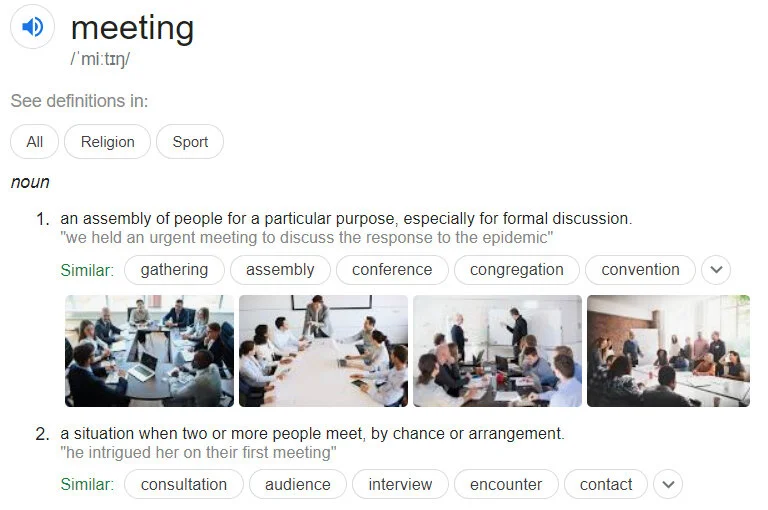
It's all right there in the definition really: the purpose. You have to find a way to gather the right people, and achieve a certain outcome or purpose.
1. Pre-Meeting: Prepare
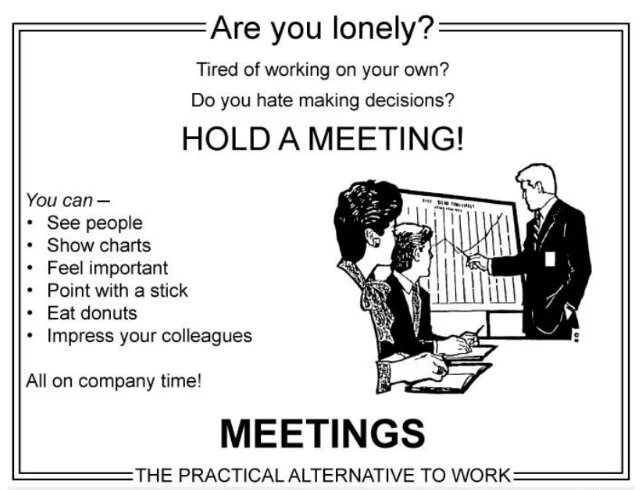
Decide the objective and output of the meeting. Use the SMART framework to set some tangible goals you want to hit as an outcome from this meeting. This is key. If after you set these goals you realize you can do this with a simple phone call to one person, and then send out a notification to other stakeholders via text or email, do that, or you'll end up here:
Identify who you need. Figure out who you need to align, together so this group of people are on the same page. If you don't find the need for this alignment, then you're better off doing one on ones. Pro Tip: Also consider asking 1-3 people to attend to help you run the meeting more efficiently. Either by splitting into smaller groups and having them lead discussions, or just contributing their expertise or inputs.
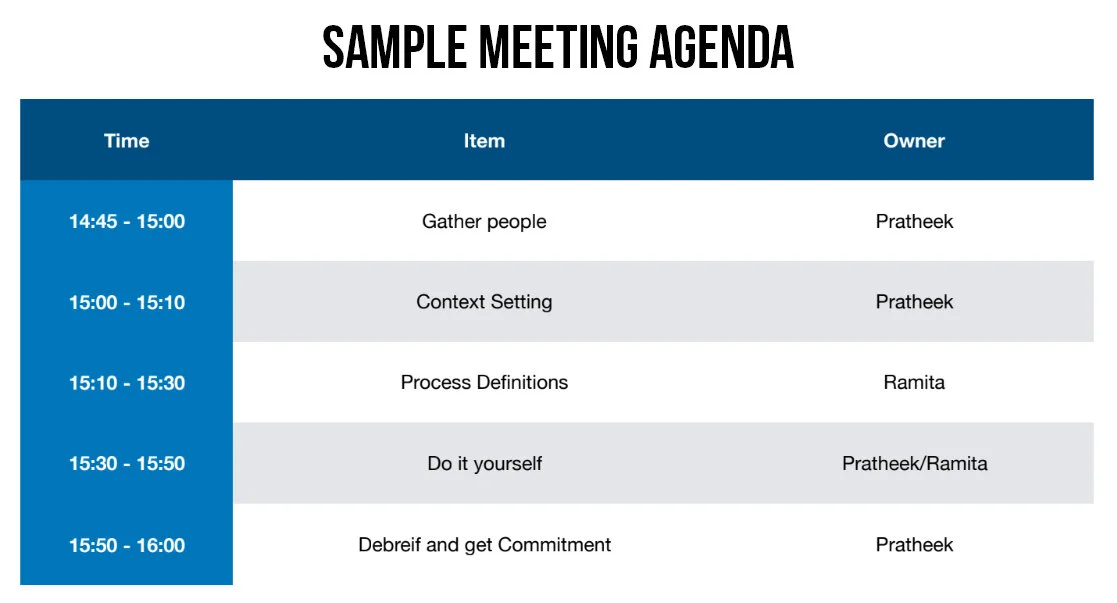
Prepare an agenda for the meeting. This is something I have seen very rarely done, but is CRUCIAL to keep a meeting effective and on time. If you don't know how you are using your time to hit the objectives you've set, you've already lost. Each item on your agenda needs to have a set time. Each item on the meeting needs to have an owner, in case you are delegating sections to other.
Send a Meeting Invite. Use whatever tool you usually use (or just drop a message) and let your attendees know about the meeting. Rather than just notifying them, use this space to sell being in the meeting to them. What's in it for them? Also make sure you share your objectives and agenda here, so people don't randomly divert from the purpose of the meeting.
Ask people to come prepared. Attach any information you need them to be on top of if required. Even ask them to check in with you before the meeting personally before the meeting once they are prepared, to be sure.
Figure out how you want to hit your objectives. Brainstorms? Open Discussions? Quizzes? Push Ups? ;) Depending on what your objectives are - making a decision/shaping behavior/transferring knowledge/building skill/etc, put some effort designing ways to achieve them instead of plain old lectures - no one likes plain old lectures. Heck, there are so many ways to make meetings fun, even!
Medium for the meeting. Make sure you Zoom link is created (with passwords please), your deck is ready (without too much text please), your whiteboard is set up, and/or your mic/projector/webcam is all tested. It's the most annoying thing when you turn up on time for a meeting but technical difficulties eat up a fourth of your meeting.
2. Running the Meeting: Engage your Group
Start on time. Once you're late to a meeting you called for, say goodbye to asking anyone else to be on time. Chase the laggards into your meeting room/Zoom call if required.

Designate one person to take notes during the meeting. Another super crucial thing to do if you want tangible outcome from the meeting. Action Points must be put down in the format: Who does What by When.
Give the context for the meeting, repeat objective and desired output of the meeting
Provide updates on tasks from previous meeting(s) if applicable
Show the agenda again, agree on the agenda, follow the agenda, stay on time
Stay focused, place new topics that come up on parking lot for next meeting unless absolutely necessary
Agree on a decision making process during the meeting e.g. majority vote, leaders choice, to avoid unnecessary delays in arguments/shouting matches.
Assign tasks and set due date. Write it on a whiteboard or project it, so everyone can see. These also go on the minutes.
Before finishing the meeting:
Ask multiple participants to summarize all decisions and tasks
Schedule a follow-up meeting if required
End on time! This will leave your people with a feeling of trust that you don't keep them beyond whatever time you've requested of them.
3. Post Meeting: Implement
This (ironically) is probably the most important bit of the meeting. In order for your meeting to lead to something, you need to be able to convert the alignment you created in the meeting to tangible action. If you don't do this, your meetings will fade into irrelevant spaces of time that you gather people for lofty decision, and nothing else. Build a culture of every single meeting leading to great results.
Distribute minutes as soon as possible
Communicate tasks to task owners
Track tasks and follow-up if not completed by due date
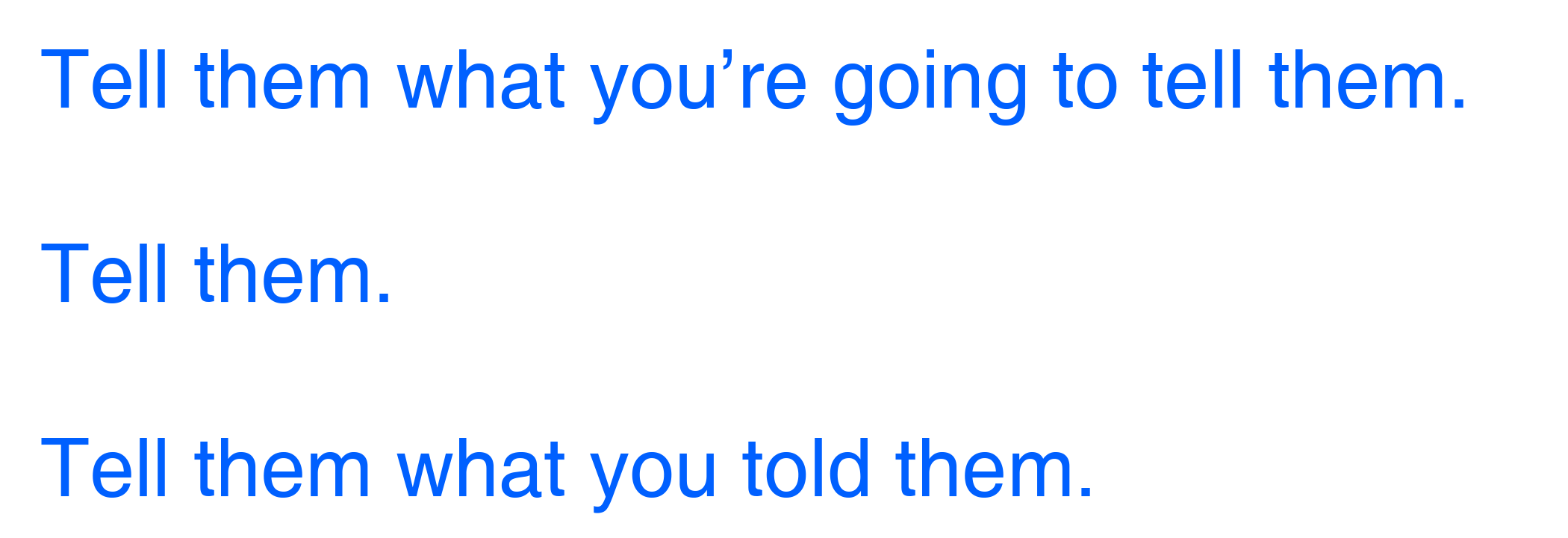
Pro Tip: For any Meeting or even Conversations, I've noticed there's a simple way to make sure your people get what you want them to out of them:
Reach out and let me know how your meetings change once you've tried these things!
Let me know how your meetings change once you've tried these things! Want to discuss anything in particular? Reach out to me any time!
I head MotivOcean Consulting, and am helping startups and SMEs solve technology and business challenges with a combination of design thinking, and common sense.